

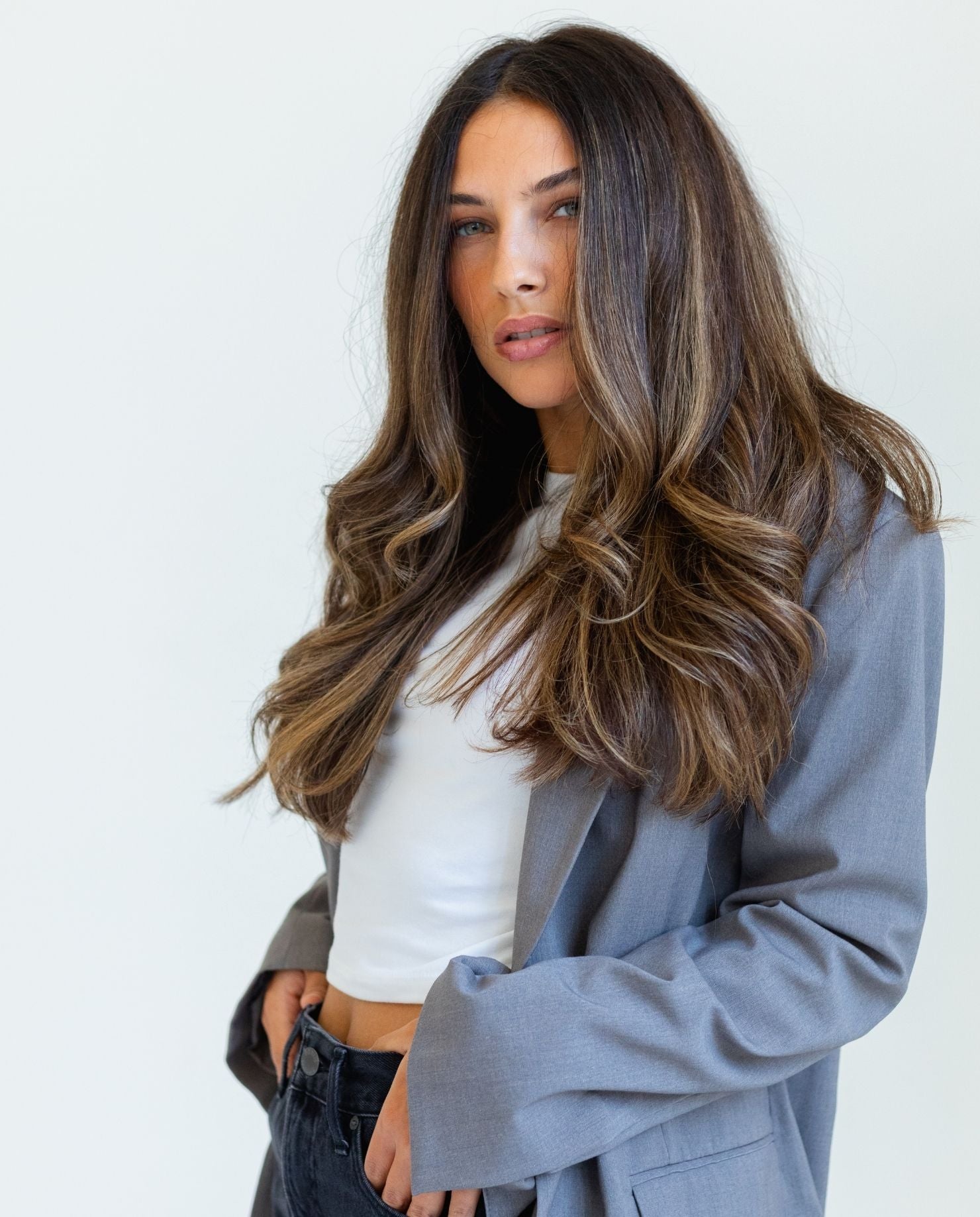
K-Tip Hair Extensions: A Professional Guide to Keratin Bond Extensions
K-tip extensions are discussed under several names. A client may ask for K-tips, an educator may refer to keratin bonds, and a product line may describe the same general category as fusion hair extensions. The language changes, but the professional questions remain the same: How does the method work? Which clients are appropriate candidates? And what should a stylist evaluate before choosing a keratin-bond hair line?
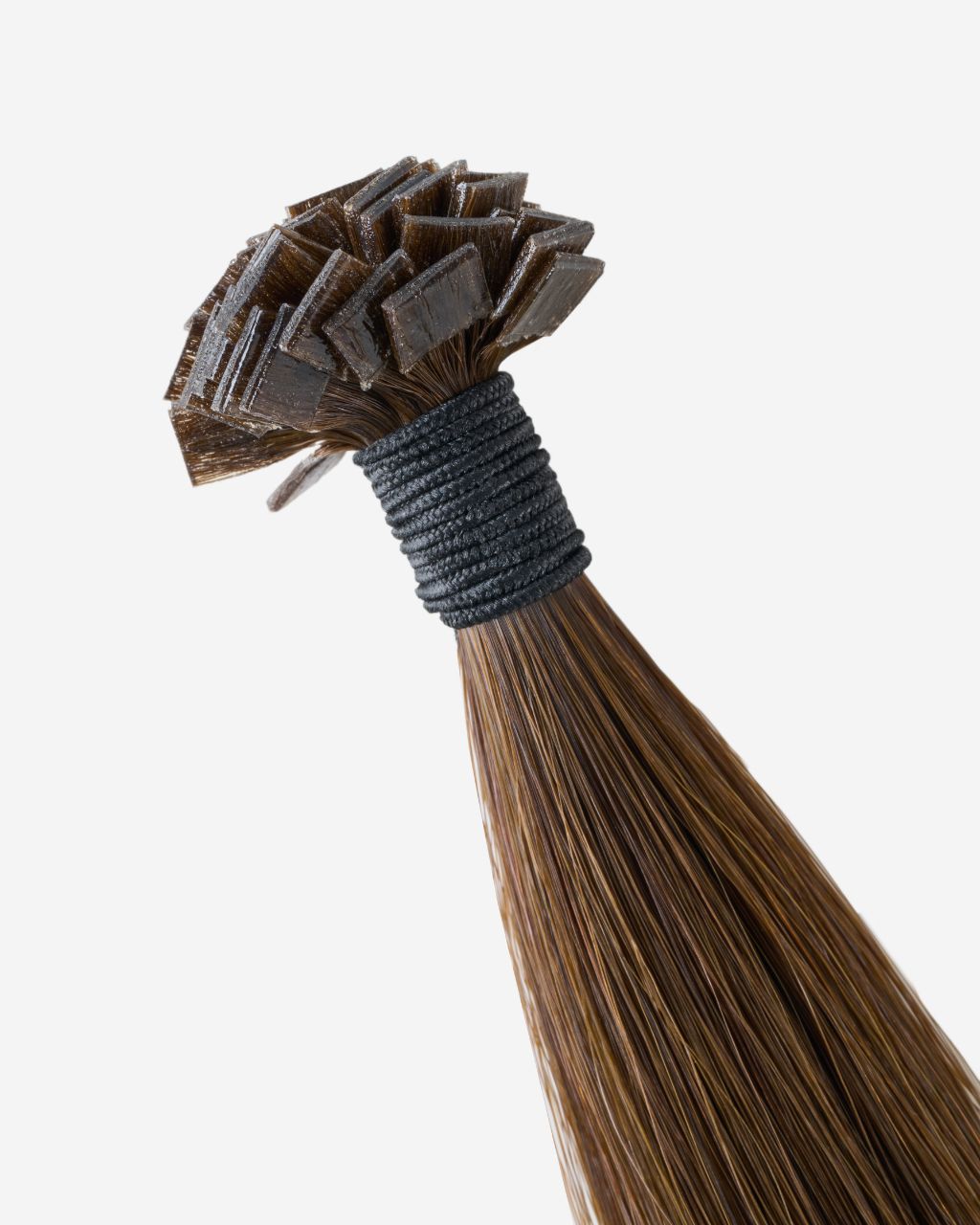
K-tip hair extensions are individual strands of extension hair attached with small, pre-formed keratin bonds. During a professional service, a fusion tool softens each bond so the stylist can form it around a carefully selected section of natural hair. “Keratin bond,” “keratin tip,” and “fusion” are closely related terms for this method. Installation and removal should be performed by a trained professional.
For extension professionals, the value of the method is not simply that the attachments are small. It is the degree of control they can provide over placement, density, movement, and color. That control still depends on responsible client selection, precise sectioning, appropriate weight distribution, and consistent home care. For the complete at-home and salon framework, read our hair extension maintenance guide, including washing, drying, sleep, warning signs, appointments and professional removal.
What Are K-Tip Hair Extensions?
K-tip extensions are a strand-by-strand extension method. Instead of attaching hair along a continuous seam or row, the stylist places individual pre-bonded strands throughout a planned section of the head. To understand the row-based alternative, including the difference between hand-tied, genius and beaded terminology, read our professional guide to weft hair extensions.
Each extension strand has a keratin-based bond at one end. During application, a professional fusion tool softens the bond. The stylist then shapes it around an appropriately sized section of the client's natural hair, following the product manufacturer's application protocol.
Because the attachments are individual, the stylist can adjust the placement pattern and total density with greater specificity. That can be useful around the perimeter, crown, or other areas where the concealment of a wider attachment may be more challenging. It also allows multiple colors to be distributed strand by strand, creating dimension without requiring every shade to sit in the same row.
This flexibility should not be confused with universal suitability. A small attachment can provide more placement options, but it does not remove the need to assess the client's natural density, strand strength, scalp condition, chemical history, goals, and willingness to maintain the method.
Professionals evaluating the category can explore Vera Keratin Micro-Bonds™, Vera's compact, pre-formed approach to keratin bond extensions.

K-Tips, Keratin Bonds, and Fusion Extensions: What Is the Difference?
The terms are often used interchangeably because each describes a different part of the same general method. “K-tip” refers to the pre-bonded tip, “keratin bond” describes the attachment material and finished bond, and “fusion” refers to the heat-application process.
| Term | What it means in this guide |
|---|---|
| K-tip or keratin tip | A common category name based on the pre-bonded tip at the top of each extension strand |
| Keratin bond | The keratin-based attachment and the bond formed during application |
| Fusion extension | A name based on the professional heat-application method |
| Keratin Micro-Bonds™ | Vera's compact, pre-formed keratin bond product |
These labels do not mean every product is technically identical. Brands may use different keratin formulations, bond shapes, strand weights, dimensions, hair sources, and application protocols. A professional should evaluate the specifications of the actual system rather than assume that every product called a K-tip will behave the same way.
Why Professionals Choose an Individual-Bond Method
A keratin bond service gives the extension professional control at the individual-strand level. That creates several practical advantages when the method is appropriate for the client.
Placement can be highly customized
Individual bonds allow the stylist to build a placement plan around the client's density, haircut, head shape, natural fall, and desired result. The goal may be full length, targeted fullness, added volume through the sides, or carefully distributed color. The same method can support very different outcomes because each strand is placed intentionally.
Density can be distributed rather than concentrated
The professional can vary the number and location of bonds instead of applying the same amount of hair to every area. The attachment and section still need to be balanced appropriately, but the format provides granular control over where density is added.
Individual movement can support natural styling
Because the extensions are not joined along one continuous seam, the bonds can move independently. With correct placement, the method can support flexible styling and natural movement while remaining concealed within the finished result.
Color can be built strand by strand
Using more than one shade allows the stylist to distribute lightness, depth, and dimension through the placement itself. Accurate blends and a well-developed color range can reduce the need to alter the extension hair before installation.
None of these advantages makes K-tips the “best” method for every client. A professional recommendation should come from the consultation, not from a predetermined preference for one attachment type.
How a Professional K-Tip Service Works
A K-tip installation begins well before the first bond is applied. While the exact protocol varies by product and educator, a responsible professional service generally follows five stages.
-
Consultation and assessment. The stylist evaluates the natural hair and scalp, discusses the client's history and goals, and determines whether a keratin bond method is appropriate.
-
Color, length, density, and placement planning. The stylist selects the hair, calculates the amount needed, and maps the placement around the client's natural density and intended result.
-
Controlled application. Working with clean sectioning and the correct professional tool, the stylist softens and forms each bond according to the system's protocol. Vera's system is designed for use with the Vera Keratin Fusion Tool.
-
Cutting, blending, and finishing. Once application is complete, the extension hair is shaped into the client's natural hair so the final result reads as one haircut rather than two separate lengths.
-
Home-care education and scheduled removal. Before the client leaves, the stylist should explain brushing, washing, drying, styling, and nighttime care, along with when to return for professional assessment and removal.
This is intentionally a service overview, not an installation tutorial. Heat settings, section sizes, bond formation, placement distances, and removal techniques should follow the education and technical guidance for the specific system being used.
Client Suitability and Responsible Placement
The best method is the one the client's natural hair and lifestyle can support. Before recommending keratin tip extensions, a professional should assess several factors together.
-
Natural density and strand strength: Can the selected sections support the planned attachment and extension weight?
-
Scalp condition: Is the scalp healthy, comfortable, and free from visible inflammation or irritation?
-
Chemical and service history: Has the hair been lightened, relaxed, compromised by heat, or affected by breakage?
-
Current shedding or thinning: Is there unexplained change that should be addressed before adding extensions?
-
Desired result: Is the client seeking targeted volume, length, color, or a complete transformation, and is that result realistic for the starting density?
-
Lifestyle and maintenance behavior: Will the client brush, wash, dry, style, and return for removal as instructed?
Smaller bonds can give a stylist greater placement flexibility, particularly in detailed areas. They do not automatically make a service appropriate for fine, fragile, thinning, or compromised hair. Bond weight, natural-hair section, placement, total density, and wear plan must still work as a complete system. For a deeper method-selection framework, read our guide to hair extensions for fine or thin hair, including the differences between fine strands, low density, and active thinning.
Stylists also have a clear boundary of responsibility. Unexplained hair loss, persistent scalp pain, inflammation, or a suspected scalp disorder is not something to diagnose behind the chair. When those concerns appear, the appropriate next step is a referral to a qualified medical professional before proceeding.

Can K-Tip Extensions Damage Natural Hair?
K-tip extensions are not automatically damaging, but no extension method should be described as universally damage-free. Risk is shaped by client selection, the relationship between bond weight and natural-hair section, placement, tension, chemical history, wear time, home care, and professional removal.
Repeated pulling on the hair can contribute to traction alopecia, a form of hair loss associated with chronic tension. The American Academy of Dermatology advises that extensions should be applied by a professional and that pain or a headache can indicate that a style is too tight. A peer-reviewed review of traction alopecia likewise identifies the extent and duration of pulling as important risk factors.
For the professional, that means several things in practice:
-
Do not use a smaller bond as permission to overload a weak natural-hair section.
-
Do not ignore discomfort, persistent tightness, tenderness, or irritation.
-
Do not apply extensions over a scalp or hair condition that has not been appropriately assessed.
-
Do not treat removal as an afterthought. Bonds should be removed using the correct professional product and protocol, without forcing or pulling the natural hair.
Good extension work is not defined only by how the installation looks on the first day. The condition of the client's natural hair during wear and after removal matters just as much.
What Professionals Should Evaluate in a Keratin-Bond Hair Line
The product line should make it easier for a stylist to plan accurately and repeat good work. Before adding a professional fusion hair extension system to the salon, look beyond the shade photos and evaluate the technical foundation.
1. Clear bond and pack specifications
The brand should state how many strands are included, the grams per strand, total pack weight, available lengths and textures, and the dimensions or format of the attachment. Clear specifications help the stylist calculate an install and understand exactly what is being ordered.
2. Consistency from bond to bond
When the starting weight and bond dimensions vary, the stylist must correct that inconsistency behind the chair. A consistent pre-formed bond creates a more predictable starting point while preserving professional control over the final placement.
3. Bond workability and an established protocol
The attachment should form cleanly when used with the recommended tool and process. The brand should provide clear application and removal guidance rather than relying on generic assumptions about every fusion system.
4. Hair construction and cuticle alignment
Bond quality matters, but the client wears the hair itself every day. Professionals should understand whether the hair is Remy, how the cuticle is handled, whether synthetic fibers or heavy coatings are used, and how the product is expected to perform through washing and styling. Learn more about how Remy hair and cuticle alignment affect extension quality.
5. A usable color system
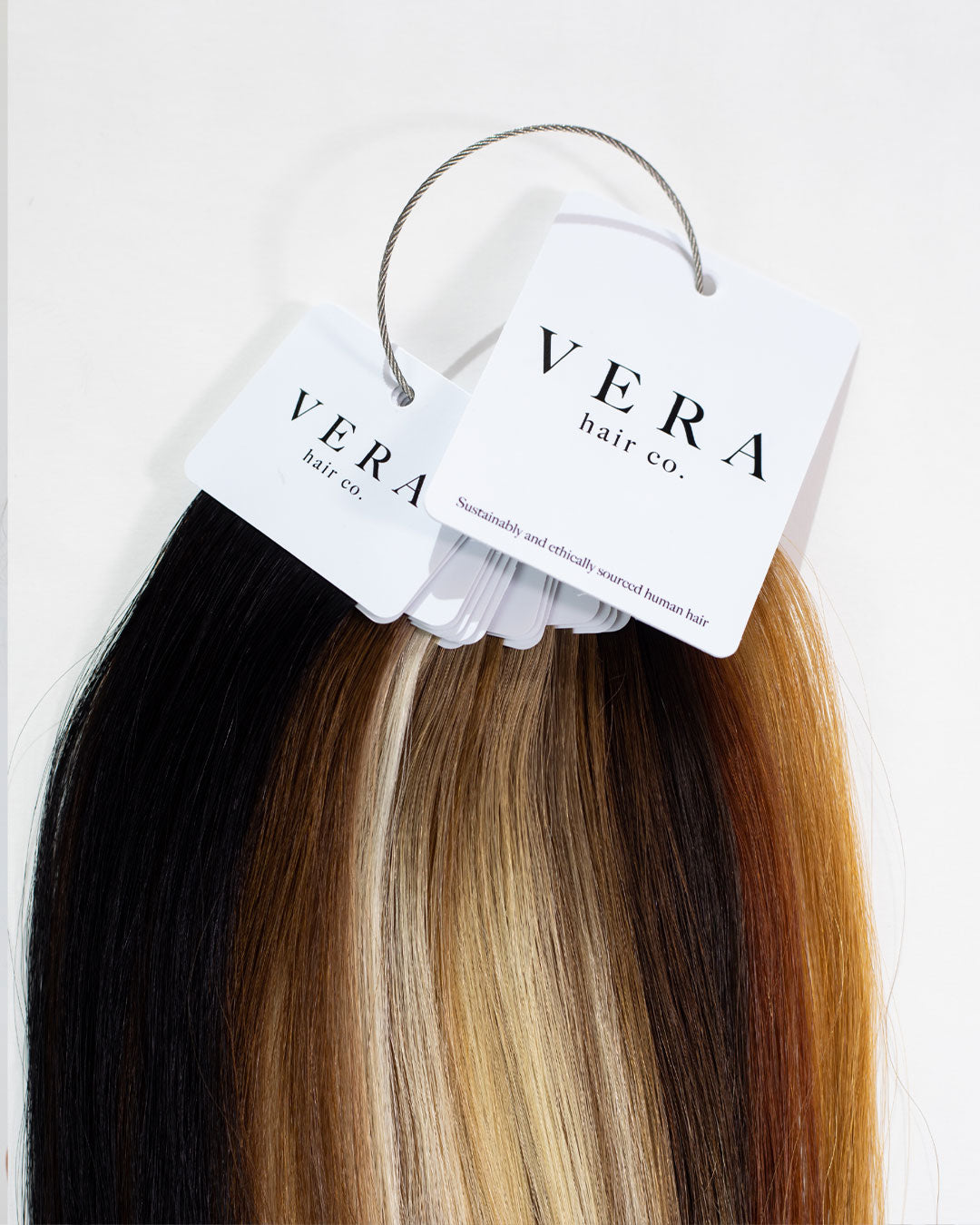
A broad shade count is less useful than accurate, wearable color. Evaluate the balance of solid and dimensional shades, the consistency between batches and methods, and whether the blends can be installed without unnecessary toning or correction.
6. Tools, removal, education, and account support
A complete professional system extends beyond the hair. Look for compatible tools, a defined removal product, care guidance, ordering resources, dependable fulfillment, and support when a product or color question arises.

Vera Keratin Micro-Bonds™: Custom-Bond Precision, Pre-Formed
Many experienced extension professionals manually reduce or rebuild larger keratin tips to create a smaller, more customized attachment before installation. That additional preparation can produce the format they want, but it also adds another variable to the service.
Vera Keratin Micro-Bonds™ were designed around that behind-the-chair reality: the precision of a smaller salon-customized bond, pre-formed for a consistent starting point and ready to apply directly from the pack.
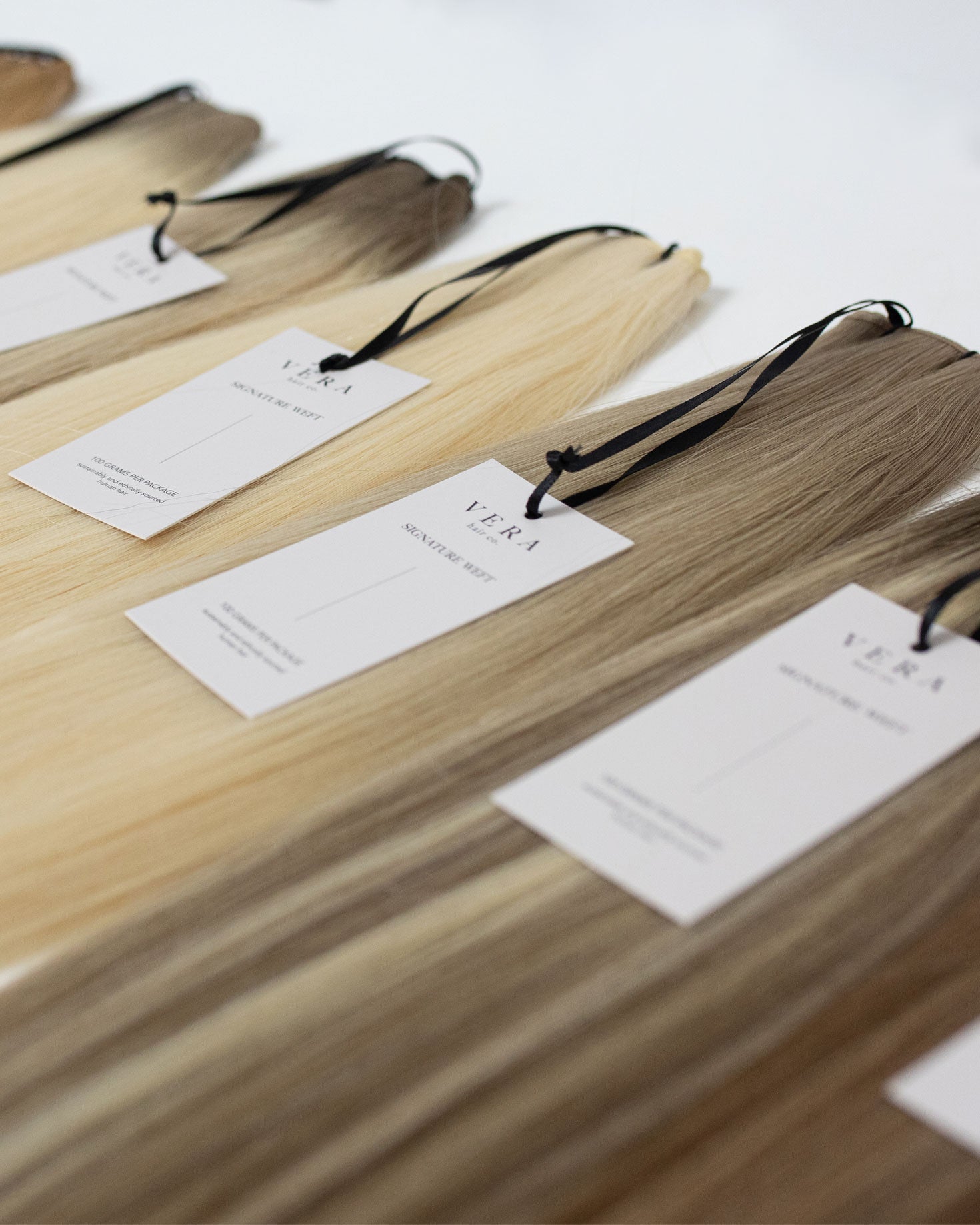
Each bond contains 0.4 grams of hair and measures 5 mm wide by 7 mm tall. Each pack includes 50 bonds and 20 grams of hair. The collection is offered in 18-inch and 22-inch lengths, in Vera's Signature Straight texture, with pre-formed bonds made from 100% organic Italian keratin. To understand how those pack specifications translate into a complete service plan, read our hair extension weight and density guide, including bond counts, total grams and distribution across the finished installation.
The smaller format supports detailed placement and density planning while leaving the professional responsible for selecting the appropriate section, location, and total amount of hair for the client. Because the starting weight and dimensions are already defined, the stylist can plan around a consistent unit rather than first resizing every bond by hand.
Vera's color system is available across the Keratin Micro-Bond collection, allowing professionals to combine solid and dimensional shades within an individual-strand placement plan. The extension hair is 100% human Remy hair with aligned, intact cuticles and no synthetic blend, supporting the same hair-quality standard across the system.
Shop Vera Keratin Micro-Bonds™
Apply for Professional Access
K-Tip Maintenance and Removal
Maintenance begins with instructions the client can realistically follow. The exact routine should come from the stylist and the hair brand, but several principles are central to responsible wear.
-
Brush gently and consistently, supporting the attachment area and working from the ends upward.
-
Keep conditioners, oils, and styling products away from the bonds unless the product guidance specifically states otherwise.
-
Dry the hair thoroughly after washing rather than leaving the attachment area wet for an extended period.
-
Protect the hair at night and before swimming.
-
Separate and monitor the bonds as directed by the stylist.
-
Return to the professional if bonds begin to mat, slip, feel uncomfortable, or become difficult to manage.
Removal should be a scheduled professional service. The stylist uses a compatible bond-removal product, such as the Vera Keratin Micro-Bond Removal Solution, and follows the system's protocol to soften and release the attachments in a controlled way.
Professionals and clients can find Vera's Homecare Guide, Micro-Bond Pack and Weights guide, and additional extension resources in the Digital Resource Library.
Frequently Asked Questions About K-Tip Extensions
Are K-tips and keratin bond extensions the same?
They usually refer to the same general strand-by-strand category. “K-tip” or “keratin tip” refers to the pre-bonded tip, while “keratin bond” refers to the attachment material and finished bond. “Fusion extension” describes the heat-application method. Product specifications and protocols can still differ significantly by brand.
How long do K-tip extensions last?
There is no responsible universal wear-time promise. Longevity varies with the specific product, the client's natural growth and shedding, placement, maintenance, lifestyle, and the professional's service plan. The installer should establish a removal schedule based on the client and the system used rather than waiting until the bonds become difficult to manage.
Can K-tip extensions be used on fine or thin hair?
Sometimes, but “fine” and “thin” do not describe one universal starting condition. A professional must assess density, strand strength, scalp condition, chemical history, current shedding, and the amount of hair needed for the desired result. A smaller bond provides placement flexibility; it does not replace that assessment or guarantee suitability.
How much do K-tip extensions cost?
Service pricing depends on the amount and length of hair, the number of colors used, the complexity of the placement, the stylist's market and expertise, and whether cutting, blending, removal, or follow-up services are included. Clients should receive a personalized quote after a consultation. Vera's professional product pricing is available only to approved professional accounts.
Can K-tip extensions be reused?
Reuse depends on the hair, bond system, condition after wear, and the manufacturer's approved protocol. Some extension hair may be eligible for professional retipping; other products are intended for a single installation. A stylist should never assume that a bond or strand can be reused without guidance for that specific product.
How are K-tip extensions removed?
A professional applies the system's compatible removal solution and uses the prescribed technique to soften and release each bond. The attachment should not be pulled, peeled, or forced from the natural hair. Removal is also an opportunity to evaluate the hair and scalp before recommending another installation.
Precision Starts Before the First Bond Is Applied
The quality of a K-tip service is not determined by attachment size alone. It comes from the complete system: honest client assessment, weight matched to the natural-hair section, controlled placement, consistent product specifications, high-quality extension hair, responsible aftercare, and professional removal.
For approved Vera professionals, explore the complete Keratin Micro-Bonds™ collection. Licensed professionals who do not yet carry Vera can apply for professional access.
Researching K-tip extensions for yourself? Find a Vera Artist for a personalized professional recommendation.