

Article: Weft Hair Extensions: A Professional Guide to Hand-Tied, Genius and Beaded Wefts
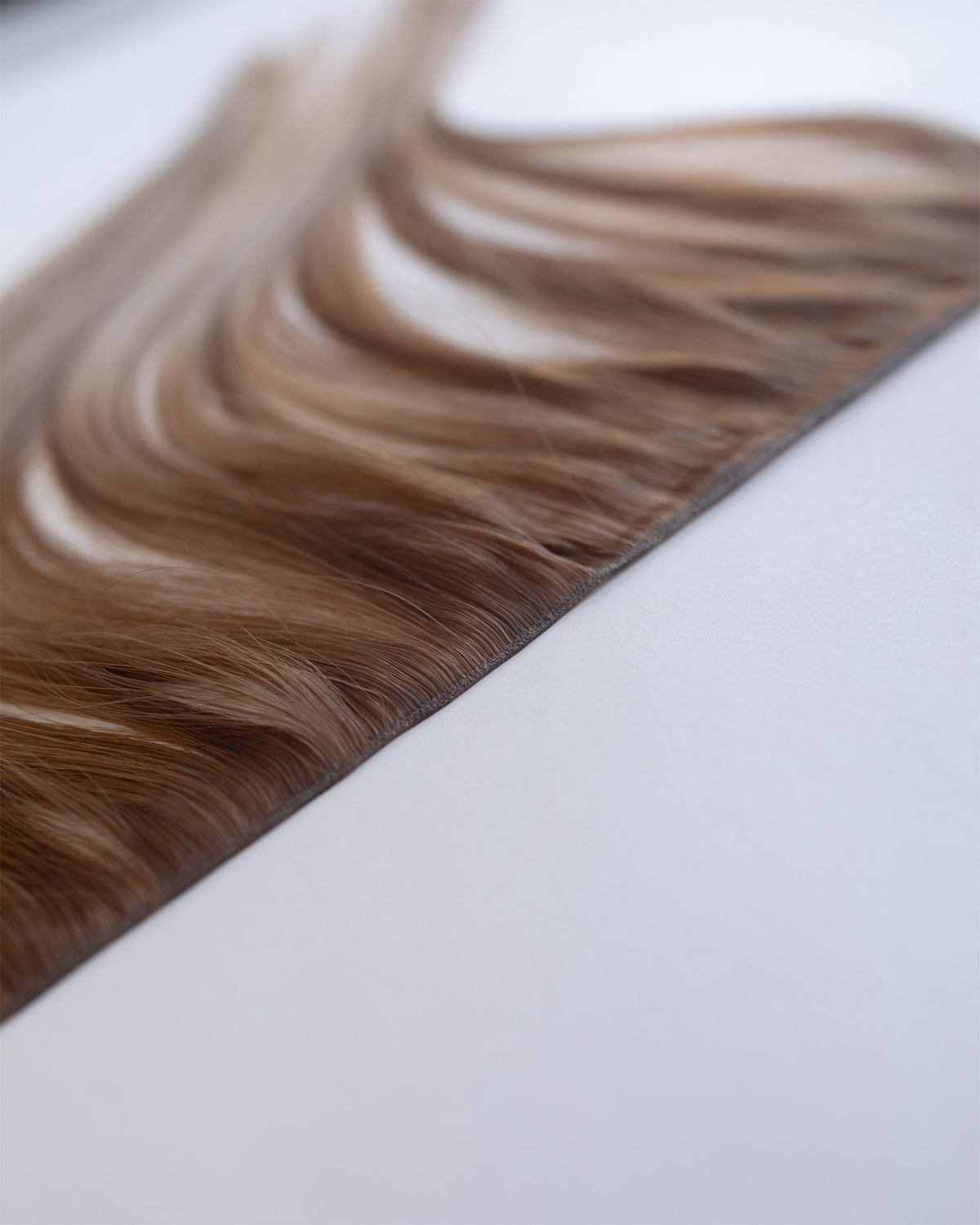
Weft Hair Extensions: A Professional Guide to Hand-Tied, Genius and Beaded Wefts
Clients often ask for an installation by name: hand-tied extensions, a beaded row, a sew-in or an invisible weft. Professionals have to determine whether the client is describing the hair, the way its seam is constructed or the method used to attach it.
Weft hair extensions are lengths of extension hair secured along a continuous horizontal seam or track. Hand-tied, machine and genius wefts describe different ways that seam may be constructed; beaded, sewn-in and hidden-row terms generally describe how a professional attaches it. Semi-permanent weft installation, maintenance and removal should be performed by a trained extension professional.
That distinction makes it easier to compare products and build an installation around the natural hair rather than a category name.
What Are Weft Hair Extensions?
A hair weft is extension hair joined along a continuous seam. One or more pieces are arranged in planned rows to add length, fullness or both. Depending on the method, the stylist may secure the weft to a bead-supported, sewn or proprietary foundation.
The continuous format is what separates weft extensions from individual methods such as keratin bonds. A weft distributes extension hair across a row. An individual-bond system distributes it strand by strand.
The word “weft” alone does not reveal seam thickness, cutability, weight or installation protocol. The result depends on the hair, seam, foundation, placement, weight and professional technique working together.
Professionals comparing thin, customizable constructions can explore Vera Micro-Tied Wefts, Vera's genius-style approach to the category.

Weft Construction and Installation Method Are Not the Same Thing
The language becomes confusing because product and service names are often used as if they mean the same thing.
The simplest way to clarify the category is to separate what the professional buys from how the professional attaches it.
What the professional buys
| Construction term | What it generally describes | What the professional should confirm |
|---|---|---|
| Hand-tied weft | Extension hair tied by hand along a narrow seam | Whether and where it may be cut; an unsecured cut can allow some hand-tied constructions to unravel |
| Traditional machine weft | Extension hair sewn by machine along a reinforced seam | Seam thickness, flexibility, density, return hair, cutability and the brand's cut-end protocol |
| Genius or micro weft | A thin, machine-produced or bonded seam designed for flexible row customization | The actual seam material and specifications; “genius” and “micro” are not one universal standard |
| Vera Micro-Tied Weft | Vera's thin, cut-anywhere genius-style weft with a polyurethane seam and no return hair | Vera's product and installation guidance |
How the professional attaches it
| Installation term | What it generally describes |
| Beaded row or beaded weft | A bead-supported foundation used to secure one or more wefts |
| Sew-in weft | A weft secured with thread to a prepared foundation; the type of foundation may vary |
| Hidden or invisible row | A technique or branded method intended to conceal the beads, thread or foundation |
| Hand-tied extensions | Common shorthand that may describe a sewn or beaded installation using hand-tied wefts; the product and technique should be clarified separately |
Two clients asking for “hand-tied extensions” may not be requesting identical services. One may mean the weft's construction; the other, a beaded-and-sewn row method taught under that name.
Terms such as butterfly, hybrid, flat, seamless and invisible weft also vary across brands. They may describe seam construction, a marketed product category, an installation technique or some combination of the three. The name is a starting point. The actual product specifications and approved protocol are what matter behind the chair.
Hand-Tied, Machine and Genius Wefts: What Changes at the Seam?
The seam determines how the weft can be customized and how much material sits within the row. A professional comparing hand-tied wefts, machine weft hair extensions and genius or micro weft hair extensions should focus on how each product behaves within the intended service.
Seam profile and flexibility
A narrow, flexible seam can help a row sit closer to the head and may reduce visible or tactile bulk. “Thin,” however, is not a complete specification. Seam material, rigidity, density and behavior through repeated salon handling also matter.
Cutability and row customization
Traditional hand-tied weft extensions often require the stylist to work within the product's original sections or secure the seam according to the brand's protocol. Cutting arbitrarily through the seam may create an unraveling risk.
Many genius weft hair extensions are designed to be cut more freely, but the name does not guarantee that every product can be cut the same way. Confirm where it may be cut, whether the end requires sealing and what the manufacturer approves.
Return hair at the seam
Some weft constructions fold or secure shorter strands back into the seam, creating what professionals often call return or “mustache” hair. The amount, length and feel vary by product. When comparing professional weft hair extensions, inspect the seam directly rather than relying only on a front-facing product photograph.
Density, stacking and pack transparency
Two wefts can look similar while carrying very different amounts of hair. Grams per piece, total pack weight, piece count, lengths and textures allow the professional to plan an order and determine how much material will sit within a row. For a complete planning framework, read our hair extension weight and density guide, including how grams, natural-hair density, desired result and row distribution work together.
Also ask how the seam responds to washing, styling, move-up services and any cutting or sealing required by the brand. A product name cannot answer those questions.

How a Professional Weft Service Works
A weft service begins with assessment, not a predetermined number of rows. The exact process varies, but a responsible service generally follows five stages.
-
Consultation and natural-hair assessment. The stylist evaluates density, strand strength, scalp condition, chemical history, current shedding, haircut, goals and maintenance expectations.
-
Hair and weight planning. The professional selects the appropriate colors, texture and length, then calculates the amount of extension hair needed for a realistic result.
-
Row and foundation planning. Placement is designed around the client's natural density, head shape, desired movement, concealment and the chosen installation method.
-
Professional attachment. The stylist installs the weft according to the education and technical protocol for the selected product and foundation.
-
Cutting, blending and care. The finished hair is shaped into the natural haircut, home care is documented and the client is given a schedule for reassessment or move-up.
Bead spacing, stitch patterns, thread paths and row formulas belong to technique-specific education, not universal instructions for every weft service.
Client Suitability, Row Planning and Responsible Weight Distribution
A thinner seam creates options. It does not make an unlimited amount of hair appropriate for every client.
The professional still has to assess whether the natural hair can support the service. Density, strand strength, scalp condition, chemical history, breakage, shedding, desired result and maintenance behavior all affect the plan. Fine and thin hair are not interchangeable terms. Our guide to the best hair extensions for fine or thin hair explains how strand diameter, density, and active thinning change method selection.
Total grams matter, but so do their distribution, the number of rows, the relationship between foundation and natural hair, and how placement changes with grow-out.
A flexible, low-profile seam may reduce bulk within the row. It cannot compensate for an unsuitable candidate, an overloaded foundation or poor placement. Product construction and professional judgment solve different parts of the service.
If a client presents with unexplained hair loss, scalp inflammation, persistent pain or a suspected hair or scalp disorder, the stylist should not diagnose the condition behind the chair. The appropriate next step is a referral to a qualified medical professional before proceeding.
Can Weft Extensions Damage Natural Hair?
Weft extensions are not automatically damaging, but no semi-permanent method is universally damage-free. Risk changes with client selection, weight, foundation placement, tension, installation, grow-out, home care, move-up timing and removal.
Repeated pulling on the hair can contribute to traction alopecia. The American Academy of Dermatology recommends professional application and states that pain or a headache can indicate that a style is too tight. A peer-reviewed review of traction alopecia likewise identifies the extent and duration of pulling as important factors in risk.
For the professional, the practical standard is clear:
-
Do not treat a thinner seam as permission to overload the natural hair.
-
Do not normalize pain, headache, persistent tightness, tenderness or irritation.
-
Do not install over a condition that requires appropriate medical assessment.
-
Do not allow grow-out, matting or a compromised foundation to become the default maintenance plan.
-
Do not treat move-up and removal services as secondary to the initial result.
Good extension work is evaluated throughout the wear cycle, not only on installation day.
Weft Extensions vs. Individual Keratin Bonds
Wefts and keratin bonds can both create length, fullness and dimension, but they give the professional control at different scales.
| Decision factor | Weft format | Individual keratin-bond format |
| Attachment footprint | Continuous seam placed in planned rows | Individual bonds placed strand by strand |
| Density planning | Hair is distributed across one or more rows | Hair is distributed through individual attachments |
| Placement flexibility | Strong row-level control | Strong strand-level control, including detailed areas |
| Salon service | Requires a selected weft foundation and attachment method | Requires a compatible fusion system and individual bond placement |
| Best use | Determined by the client, goals, natural hair and professional expertise | Determined by the same factors; neither format is universally best |
A professional may specialize in one format or recommend different methods for different clients. For the strand-by-strand category, read Vera's professional guide to K-tip hair extensions.
What Professionals Should Evaluate in a Weft Hair Line
The right product line should make accurate planning and repeatable work easier. Evaluate the system behind the name or finished image.
1. Transparent pack specifications
Confirm piece count, grams per piece, total pack weight, dimensions, lengths and textures. Clear specifications support consistent ordering and density planning.
2. Seam construction
Inspect thickness, flexibility and the material used to create the seam. Confirm whether the weft can be cut, where it may be cut, whether the ends require sealing and how the seam is expected to behave after repeated handling.
3. Return hair
Determine whether short return hair is present and how it feels at the seam. This detail affects how the product sits, stacks and feels within the installation.
4. Moisture behavior
Ask how the seam is designed to respond to washing and everyday wear, and what care or drying protocol the brand requires to maintain its integrity.
5. Hair quality
The client wears the hair, not only the seam. Confirm whether it is human Remy hair, how the cuticle is handled, whether synthetic fibers or silicone coatings are present and how consistent it is across orders. Learn more about how Remy hair and cuticle alignment affect extension quality.
6. Color system
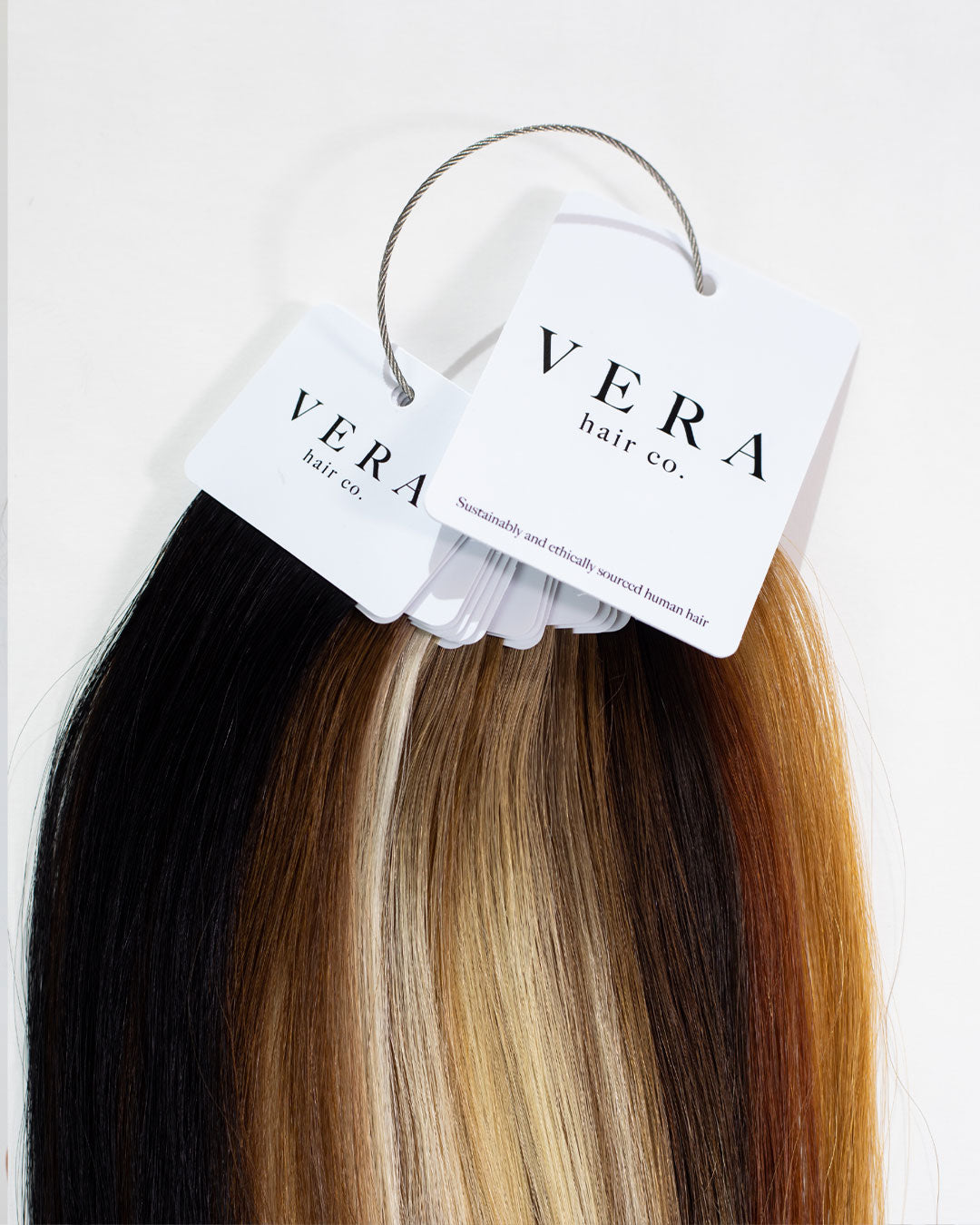
A long shade list is less useful than accurate, wearable color. Evaluate the balance of solid and dimensional shades, consistency across extension methods and how much toning or pre-install customization is regularly required.
7. Professional support
Hair is only one part of the system. Installation guidance, care resources, predictable fulfillment, account support and ordering tools all affect how reliably the line performs within the salon.

Vera Micro-Tied Wefts: Designed Differently at the Seam
Vera Micro-Tied Wefts are Vera's genius-style, cut-anywhere approach to the category, designed for row customization with clear, repeatable pack specifications.
The ultra-thin, flexible polyurethane seam can be cut where needed under Vera's product protocol without unraveling. It is free from short return or “mustache” hair, designed to sit flat and stack cleanly, and moisture resistant to help the seam maintain its structure through washing and everyday wear.
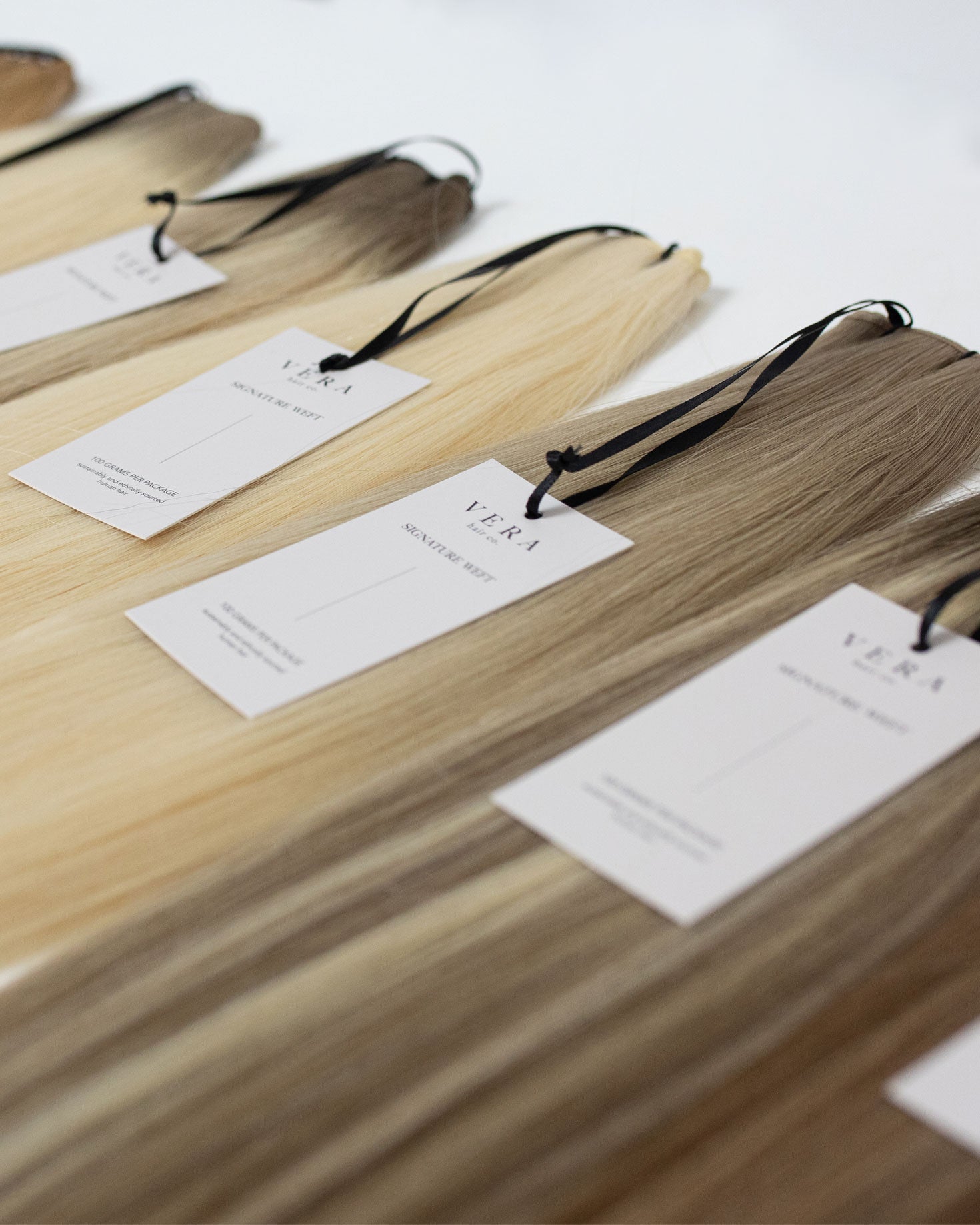
Each pack contains two wefts:
-
18-inch packs contain two 20-gram wefts, for 40 grams total.
-
22-inch packs contain two 25-gram wefts, for 50 grams total.
The current collection is offered in Signature Straight and Effortless Wave textures. Vera's extension hair is 100% human Remy hair and is free from silicone or synthetic coatings. Solid and dimensional Signature Shades are custom-developed to give professionals wearable color options that can be combined within the row without relying on heavy post-purchase correction.
The construction does not replace professional judgment. It gives the stylist a defined starting point: a customizable seam, known weights, two textures and a professional color system.
Shop Vera Micro-Tied Wefts
Apply for Professional Access
Weft Maintenance, Move-Ups and Reinstallation
A weft service continues after the client leaves the salon. The installer and product system should define the exact routine, but several principles support responsible wear:
-
Brush gently and consistently, supporting the attachment area and working from the ends upward.
-
Use the care products recommended by the stylist; Vera's current guidance specifies sulfate-free care.
-
Keep the foundation clean and dry the hair thoroughly after washing.
-
Protect the hair at night and follow the stylist's guidance before swimming.
-
Return to the salon if the row feels uncomfortable, begins to mat or becomes difficult to manage.
There is no responsible universal move-up interval or guaranteed number of reinstallations. Timing varies with natural growth, shedding, the foundation, home care, lifestyle and the professional's protocol. At each service, the stylist should assess the natural hair, scalp, foundation, seam and extension hair before deciding whether and how to proceed.
Vera professionals can find the Homecare Guide, Swimming Care Guide, Weft & Pack Weights guide and additional professional extension resources in the Digital Resource Library. Our complete hair extension maintenance guide explains the at-home routine, salon follow-up and warning signs that apply across the full service cycle.
Frequently Asked Questions About Weft Hair Extensions
What is the difference between a weft and a weave?
A weft is the physical extension-hair product: hair secured along a continuous seam or track. “Weave” is a broader service term and may describe hair attached through sewing, braiding or another foundation. The terms overlap in everyday language, but they are not exact technical synonyms.
Are hand-tied extensions and beaded weft extensions the same?
Not necessarily. A hand-tied weft describes how the hair weft is constructed. A beaded weft service describes a bead-supported foundation used to attach one or more wefts. “Hand-tied extensions” is commonly used as shorthand for a sewn or beaded-row service, so the product and installation method should be clarified separately.
What is the difference between a hand-tied weft and a genius weft?
A hand-tied weft is tied by hand along the seam and may have restrictions on where it can be cut. A genius weft generally uses a thin, machine-produced or bonded seam intended for flexible customization. Because “genius” is not one regulated specification, professionals should compare the actual seam, cut protocol, weight and return hair for each product.
Can every weft be cut?
No. Some wefts are designed to be cut wherever needed, while others must remain in their original sections or require a specific securing or sealing protocol. Cutting a weft against the manufacturer's guidance can lead to unraveling or shedding. Always follow the instructions for the exact product being installed.
Can weft extensions be used on fine or thin hair?
Sometimes, but suitability cannot be determined by the category name alone. A professional should assess natural density, strand strength, scalp condition, chemical history, current shedding and the amount of hair required for the desired result. A thinner seam may reduce bulk; it does not guarantee that a weft service is appropriate.
How often do weft extensions need to be moved up?
There is no universal interval. Natural growth and shedding, the installation method, row placement, home care and the professional's service plan all affect timing. The client should return on the schedule set by the installer and sooner if the row feels uncomfortable or becomes difficult to manage.
Can weft hair be reused or reinstalled?
Potentially. Reinstallation depends on the hair, seam, method, home care and brand protocol. The professional should inspect the natural hair and weft at each move-up rather than promise a fixed number of uses.
How much do weft hair extensions cost?
Client pricing varies with the amount and length of hair, number of colors, chosen installation method, complexity of the placement, stylist's market and expertise, and what is included in cutting, blending, move-ups and removal. A consultation is the appropriate place for a personalized quote. Vera's professional product pricing is available only to approved accounts.
The Name of the Weft Is Only the Beginning
Weft hair extensions should be evaluated as a complete system. The client's natural hair, the row and foundation plan, the seam construction, pack specifications, extension-hair quality, color and care protocol all shape the result.
For approved Vera professionals, explore the complete Micro-Tied Wefts collection. Licensed extension professionals who do not yet carry Vera can apply for professional access.
Researching weft extensions for yourself? Find a Vera Artist for a personalized professional recommendation.