

Genius Weft vs. Hand-Tied vs. Machine Weft: A Professional Guide
Genius, hand-tied and machine wefts all organize extension hair along a continuous seam, but they are not constructed—or customized—in the same way. The primary differences are found at the seam: how it is made, whether it can be cut, whether short return hair is present, how it stacks and what the manufacturer permits during installation.
For professionals, the category name is only a starting point. “Genius weft” is not one universal manufacturing standard, and products sold under the same label may use different seam materials, weights and protocols. The useful comparison is therefore not which name sounds most advanced. It is which construction gives the professional the appropriate control for the client, installation plan and wear cycle.
This guide compares genius, hand-tied and machine weft hair extensions without treating any construction as universally best.

What Is a Genius Weft?
A genius weft is a thin, customizable weft construction commonly designed to combine the low-profile seam associated with hand-tied wefts with the cutability associated with machine wefts. Many genius-style wefts are also made without short return or “mustache” hair at the seam.
That description explains the general category, not every product carrying the name. A professional should still verify:
-
What material creates the seam.
-
Whether the weft may be cut at any point.
-
Whether a cut end requires sealing.
-
Whether return hair is present.
-
How much each weft and pack weighs.
-
How the seam behaves through washing, wear and reinstallation.
-
Which installation and maintenance protocols the manufacturer approves.
The terms genius weft, micro weft, seamless weft and hybrid weft sometimes overlap in marketing, but they are not guaranteed to describe identical construction. Product specifications matter more than the label.
Weft Construction and Installation Method Are Different
Before comparing products, separate the weft from the service used to attach it.
Hand-tied weft describes a product whose hair is tied by hand along its seam. Machine weft describes a machine-sewn product. Genius weft generally describes a thinner, cuttable, machine-produced or bonded construction.
By contrast, beaded row, sew-in, hidden row and similar terms generally describe the foundation or technique used to secure one or more wefts to the natural hair.
This distinction matters because the phrase “hand-tied extensions” is used in two ways. It can mean the stylist is using hand-tied wefts, or it can refer more broadly to a method in which a stylist hand-sews wefts onto a bead-supported foundation. The product and the installation technique should be identified separately.
Our broader professional guide to weft hair extensions explains how weft construction, foundations and row planning work together.
Genius Weft vs. Hand-Tied vs. Machine Weft: Quick Comparison
| Comparison factor | Genius-style weft | Hand-tied weft | Traditional machine weft |
|---|---|---|---|
| General construction | Thin machine-produced or bonded seam; exact material varies by brand | Hair tied by hand along a narrow seam | Hair secured along a reinforced machine-sewn seam |
| Cutability | Commonly designed to be cut for row customization; verify the protocol | Usually cannot be cut arbitrarily without an unraveling risk | Commonly cuttable; the end may require sealing |
| Seam profile | Typically thin and flexible | Typically thin and flexible | Typically thicker and more structured |
| Return hair | Often designed without short return hair | Commonly present; length and feel vary | Commonly present; length and feel vary |
| Row customization | Strong width-level customization when cutting is approved | Uses complete sections, folding or manufacturer-approved securing | Cuttable, but seam thickness can create more bulk |
| Stacking | Thin profile may reduce seam bulk when multiple wefts are stacked | Can be stacked; folded sections and return hair affect the combined profile | Can be stacked with a more substantial combined seam |
| What must be verified | Seam material, cut protocol, weights, moisture behavior and brand standards | Cut restrictions, piece widths, return hair, weights and securing protocol | Seam thickness, flexibility, cut-end protocol, return hair and weights |
These are common category characteristics, not promises about every product. Evaluate the actual weft rather than assuming the table replaces manufacturer guidance.

How Are Hand-Tied Wefts Constructed?
Hand-tied wefts are made by tying extension hair along a fine seam. They are known for a narrow, flexible profile that can sit discreetly within a professionally planned row.
Their principal limitation is customization by cutting. Cutting through an unsecured hand-tied seam can allow the weft to unravel. Professionals often work with the supplied widths, fold complete sections or follow a specific securing protocol from the manufacturer.
Hand-tied wefts may also contain short return hair created by the way strands are tied into the seam. The amount and length vary, so the professional should inspect how it feels and behaves when stacked rather than relying on the category name.
How Are Machine Wefts Constructed?
Traditional machine wefts secure extension hair through a reinforced machine-sewn seam. The construction is generally durable and cuttable, allowing the stylist to adjust a piece to the planned row width.
The tradeoff is usually seam profile. A conventional machine weft is often thicker and more structured than a hand-tied or genius-style weft. That can affect how the product sits, how multiple pieces stack and how much seam material must be concealed within the row.
Machine wefts also commonly include return hair. Thickness, flexibility, density and return-hair length vary among manufacturers. The professional should also confirm whether cut ends require adhesive, heat sealing, stitching or another approved step.
How Are Genius Wefts Different?
Genius-style wefts are intended to resolve the central tradeoff between the two traditional categories: the thin profile associated with hand-tied wefts and the row-level cutability associated with machine wefts.
Depending on the specific product, the practical advantages may include:
-
A thin seam that sits and stacks with less material at the root.
-
The ability to cut the weft to the required width when permitted by the brand.
-
No short return hair in constructions designed without it.
-
More control when combining colors or adjusting density within a row.
-
Less need to fold a weft back on itself solely to achieve the correct width.
Those features create planning flexibility. They do not establish universal suitability or make every genius weft interchangeable. A thin seam can still carry substantial hair, and multiple thin pieces can still create a heavy or bulky row. The professional must evaluate natural-hair support, total weight, placement, stacking, concealment and maintenance.
For the complete planning framework, read Vera’s hair extension weight and density guide.
Which Weft Is Best?
There is no universally best weft construction. The right choice depends on what the professional needs the product to do and whether its specifications support the planned service.
A hand-tied weft may work well when its supplied widths fit the row plan. A machine weft may be appropriate when its reinforced, cuttable seam can be properly concealed. A genius-style weft may be preferred when the professional wants a thinner cuttable seam and greater width-level customization.
The client’s natural hair still determines what can be supported and concealed. Fine strands, low density, active thinning and limited coverage are different conditions. A smaller seam can create options, but it does not make every client or every amount of hair appropriate. Vera’s guide to hair extensions for fine or thin hair explains the suitability factors that should be assessed separately from product construction.
The useful question is not “Which weft wins?” It is “Which specifications give me the appropriate control for this client and row plan?”
What Should Professionals Compare Before Choosing a Weft?
1. Seam material and dimensions
Determine how the seam is produced and whether the brand publishes meaningful details. “Ultra-thin” is a comparative description, not a complete specification.
2. Cutting protocol
Confirm where the weft can be cut, whether a cut end requires sealing and what could compromise the seam. Never transfer one brand’s cut protocol to another product based only on a shared category name.
3. Return hair
Inspect whether return hair is present, how long it is and how it behaves within a stack.
4. Individual-weft and pack weights
Known weights allow professionals to calculate the amount of hair available and document what is installed. Pack count alone does not explain how many grams sit in a row.
5. Hair quality and density
The client wears the hair as well as the seam. Verify cuticle alignment, processing, density through the ends, texture consistency and whether the product contains synthetic fibers or surface coatings. Vera’s professional guide to Remy hair explains the specifications behind the fiber itself.
6. Moisture and reinstallation guidance
Ask how the seam should be washed, dried, handled during move-ups and evaluated before reinstallation. A reusable format still needs a condition-based professional decision at each service.
7. Education and support
Look for installation guidance, care resources and a clear route for technical questions. Construction without protocol leaves the professional to guess at the product’s limits.
Where Vera Micro-Tied Wefts Fit
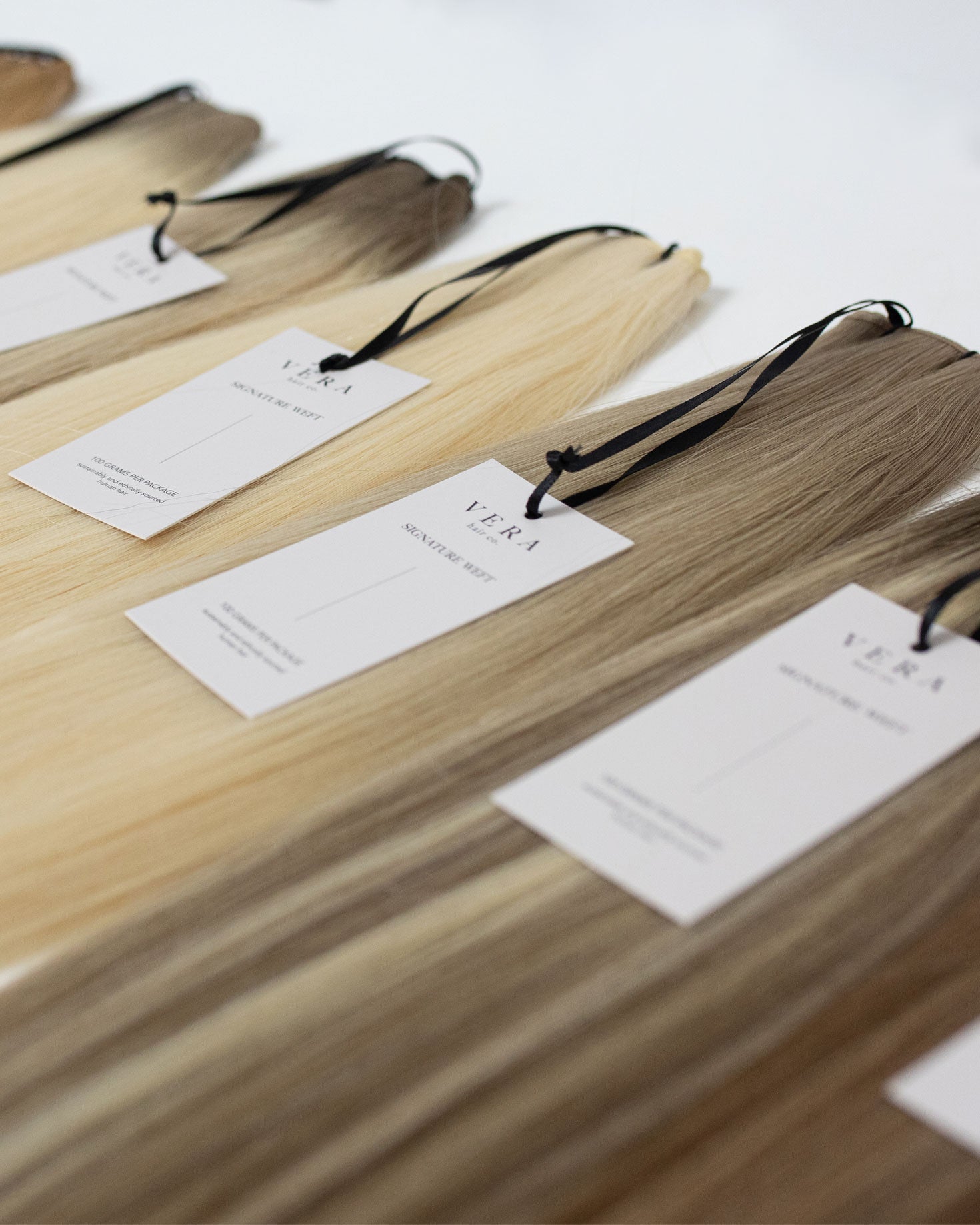
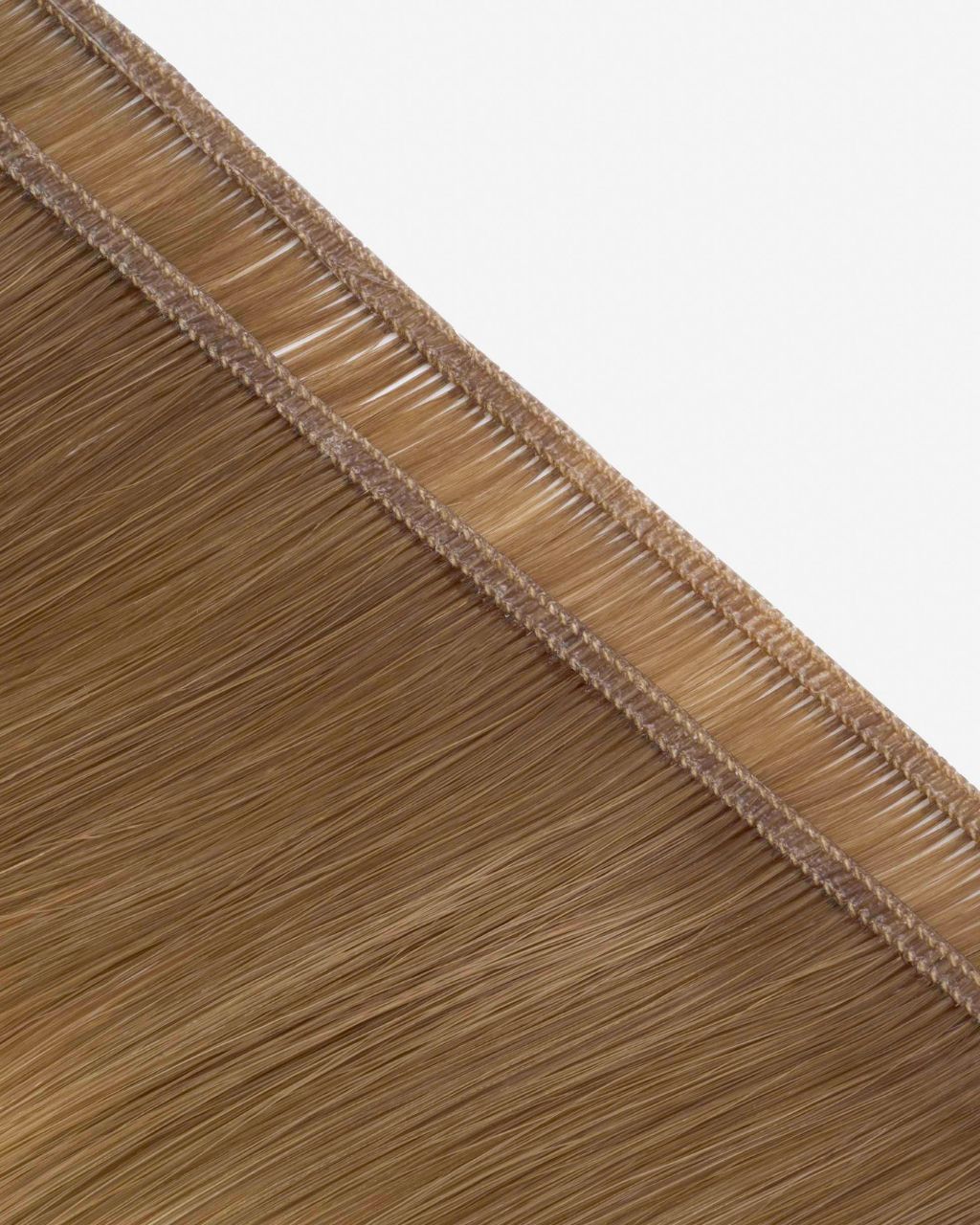
Vera Micro-Tied Wefts are Vera’s genius-style approach to the category. They use an ultra-thin, flexible polyurethane seam designed to be cut where needed under Vera’s protocol without unraveling. The seam is moisture resistant, free from short return or “mustache” hair, and designed to sit flat and stack cleanly.
The pack specifications give professionals a consistent starting point:
-
Each 18-inch pack contains two 20-gram wefts, or 40 grams total.
-
Each 22-inch pack contains two 25-gram wefts, or 50 grams total.
Vera Micro-Tied Wefts are offered in Signature Straight and Effortless Wave across Vera’s custom-developed Signature Shades. The hair is 100% human Remy hair with intact, aligned cuticles and contains no synthetic blend.
These specifications explain the product. They do not prescribe a number of rows or wefts for every client. The professional remains responsible for candidate selection, weight, stacking, row placement, installation and the complete wear plan.
Approved professionals can explore Vera Micro-Tied Wefts. Licensed extension professionals who do not yet carry Vera can apply for professional access.
Frequently Asked Questions
Are genius wefts and hand-tied wefts the same?
No. Hand-tied describes hair tied by hand along a narrow seam. Genius weft generally describes a thin machine-produced or bonded weft designed for greater cutability. Both can have a low-profile seam, but their construction and customization differ.
Can a genius weft be cut anywhere?
Many are designed to be cut for width-level customization, but the category name is not permission to cut every product in the same way. Follow the manufacturer’s approved cut and sealing protocol.
Can hand-tied wefts be cut?
Traditional hand-tied wefts generally cannot be cut arbitrarily without risking unraveling. Professionals should use the supplied widths, fold complete sections or follow the brand’s approved securing instructions.
Are genius wefts installed differently from hand-tied or machine wefts?
Not necessarily. Construction and installation are separate decisions. Different weft products may be compatible with bead-supported, sewn or proprietary row methods, depending on the product and education protocol.
Are genius wefts better for fine hair?
A thinner seam may help reduce bulk and create more placement options, but it does not guarantee suitability. Natural-hair density, strand strength, scalp condition, total weight, row placement and concealment must still be assessed by a trained professional.
Do genius wefts last longer than other wefts?
There is no universal category-level lifespan. Longevity depends on the specific hair and seam, installation, home care, heat and chemical exposure, maintenance, removal and whether the product remains suitable for reinstallation.
Does a weft without return hair eliminate shedding?
No. Return hair describes short strands folded or secured at the seam; it is not the same as shedding. Shedding performance depends on the construction, cutting and sealing protocol, installation, handling, care and condition of the weft.
Compare the Construction, Then Build the Service
Genius, hand-tied and machine wefts solve different construction problems. Hand-tied wefts prioritize a narrow hand-tied seam. Traditional machine wefts provide reinforced, cuttable construction with a more substantial profile. Genius-style wefts aim to combine a thin seam with greater row-level customization.
The name alone cannot select the product. Professionals should compare seam material, cutability, return hair, pack weights, hair quality, care requirements and brand support—then determine how those specifications fit the client and installation plan.
Considering weft extensions for yourself? Find a Vera Artist for a personalized professional recommendation
Explore Vera Micro-Tied Wefts or apply for professional access to experience Vera’s genius-style weft construction.