


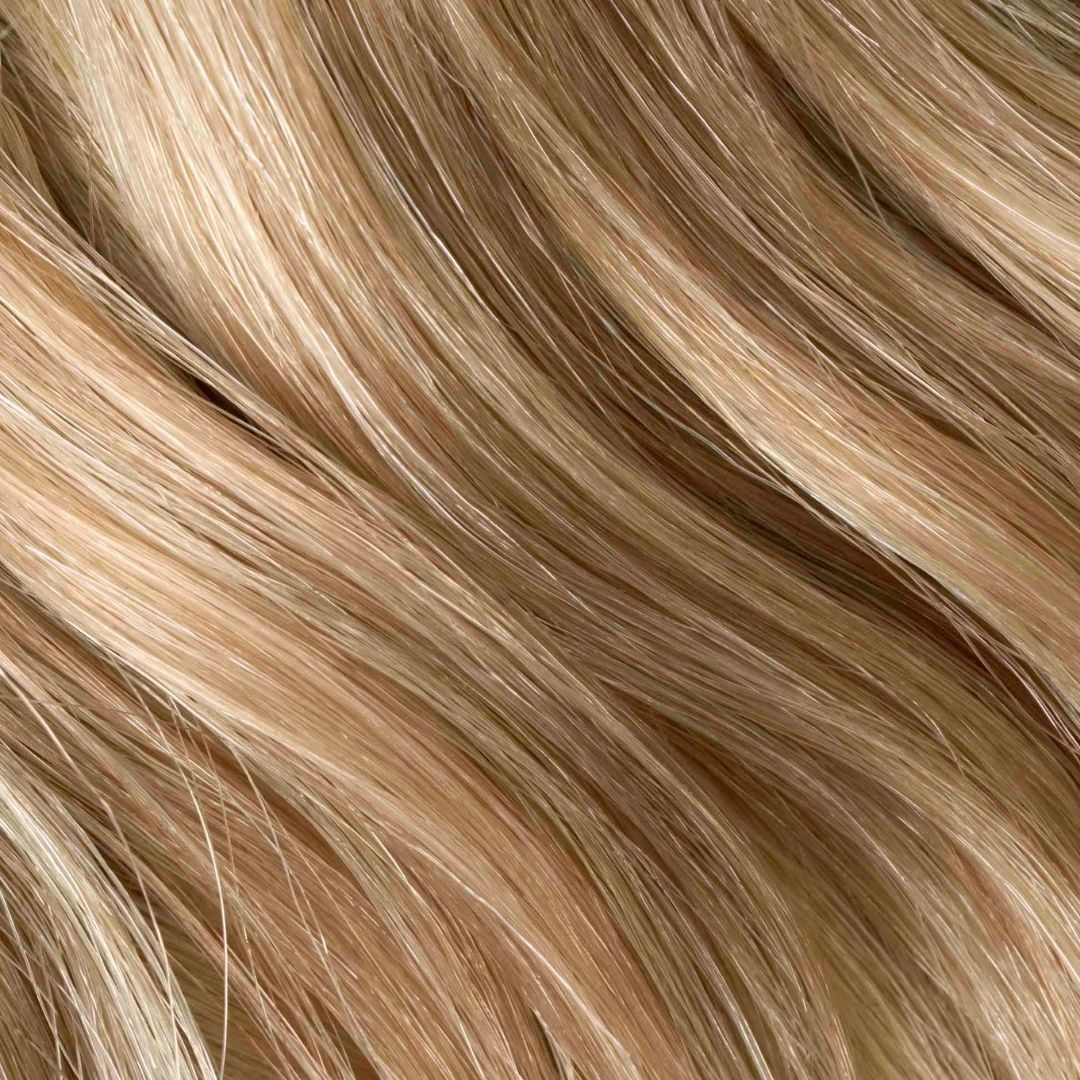
What Is Remy Hair? A Professional Guide to Cuticle Alignment and Quality
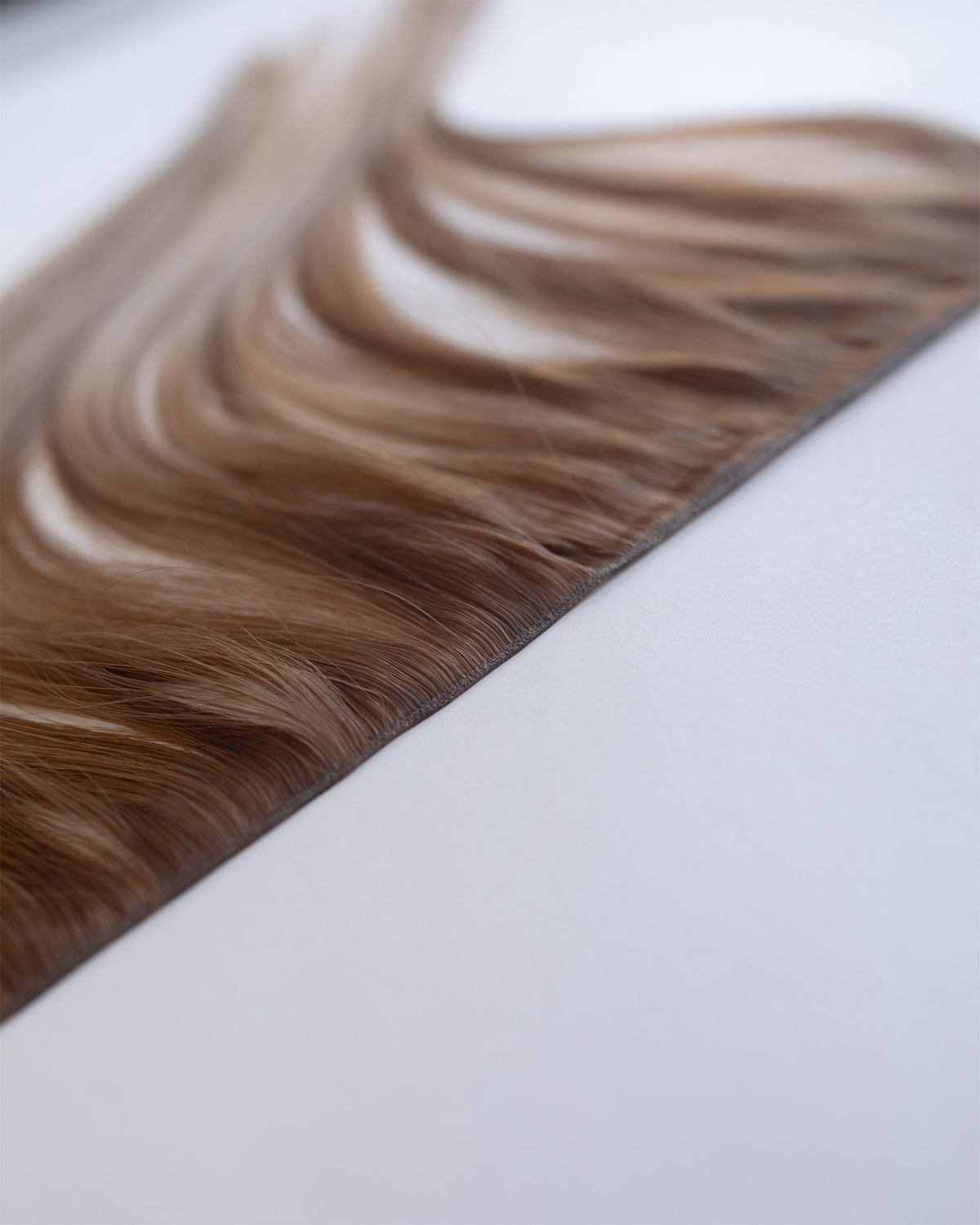
Remy hair is human hair collected and handled so the strands remain oriented in their natural root-to-tip direction, preserving consistent cuticle alignment. That alignment matters because the cuticle forms the outer surface of every strand. When extension hair is assembled with the strands running in a common direction, their surfaces can interact more consistently than hair assembled with mixed root and tip directions.
That is the useful meaning of the term. It is not a universal certification or complete guarantee of quality. A professional still needs to evaluate sourcing, processing, density, consistency, construction and product specifications before choosing an extension line.
This guide explains what Remy hair means, why cuticle direction matters, how Remy differs from other common labels and what professionals should verify beyond the word on the package.
What Does Remy Hair Mean?
In the extension industry, Remy hair means human hair whose root-to-tip orientation has been preserved during collection and processing. The strands are kept facing the same general direction rather than being gathered without regard to which end was closest to the scalp.
That definition contains two important ideas:
-
Remy hair is human hair. It is not synthetic fiber.
-
Remy describes cuticle direction and handling. It does not, by itself, tell you the donor count, country of origin, amount of color processing, strand density, attachment format or finished product quality.
You may also see the phrases Remy human hair, cuticle-aligned hair or root-aligned hair. They point to the same central concept: the strands have been kept in a consistent direction so the cuticle scales do not oppose one another throughout the bundle.
The term is useful, but it should be the beginning of a product evaluation—not the end of one.
The Hair-Shaft Science Behind Cuticle Alignment
The visible hair shaft is made primarily of a cortex surrounded by a cuticle, with a medulla present in some thicker hairs. The National Library of Medicine describes the cuticle as flat, overlapping cells covering the strand. It is the surface that encounters neighboring hairs, water, products, brushes and tools.
Why strand direction matters
On naturally growing hair, the cuticle scales point from the scalp toward the ends. Remy collection preserves that orientation when strands are assembled into an extension product. Mixed root and tip directions create less consistent surface interaction. Alignment can reduce one avoidable source of friction, but it cannot make extension hair tangle-proof.
Research also connects hair-surface condition with fiber-to-fiber friction. A PubMed-indexed review found that increased surface charge may increase friction and contribute to cuticle damage and breakage. It did not test Remy extensions specifically, but it supports the underlying surface-interaction principle.
Why extension hair still requires care
Once cut from a donor, extension hair is no longer connected to a follicle or continually coated by scalp sebum. Cuticle alignment provides a better structural starting point; it does not replace appropriate products, controlled heat, gentle detangling or professional maintenance.

Remy Hair vs. Non-Remy Hair
The practical difference between Remy and non-Remy hair is how strand direction is managed.
| Remy hair | Non-Remy hair | |
|---|---|---|
| Material | Human hair | Usually human hair; verify the product description |
| Strand orientation | Root-to-tip direction is preserved | Strands may be assembled in mixed directions |
| Cuticle condition | Cuticles are generally retained and aligned | Cuticles may be misaligned, altered or removed, depending on processing |
| Surface interaction | More consistent cuticle direction can reduce one source of friction | Opposing directions can create less consistent surface interaction |
| What the label proves | A collection and orientation standard | Only that the product is not being represented as Remy |
| What still varies | Sourcing, donor count, processing, coatings, density, color, construction and quality control | The same variables can differ widely among suppliers |
Non-Remy does not describe one universal collection source or manufacturing process. It would be inaccurate to assume that every non-Remy product comes from the same type of source, receives the same coating or performs for the same length of time. Those details should be verified with the supplier rather than inferred from a category name.
The same caution applies to Remy. Aligned cuticles are meaningful, but the label cannot promise zero tangling, a specific lifespan, minimal shedding or suitability for every client.
Is Remy Hair the Same as Human Hair, Virgin Hair or Single-Donor Hair?
No. These terms answer different questions, and they should not be treated as interchangeable.
| Term | What it tells you | What it does not tell you |
| Human hair | The fiber comes from human hair rather than being entirely synthetic | Cuticle direction, processing, donor count, density or product quality |
| Remy hair | Human-hair strands have been kept in a consistent root-to-tip direction | Whether the hair is virgin, single-donor, double-drawn, minimally processed or suited to a specific client |
| Virgin hair | Commonly used to describe hair that has not been chemically colored or otherwise chemically altered before sale | Cuticle alignment, donor count, construction or quality control; definitions can vary by supplier |
| Single-donor hair | The hair in the stated unit or lot comes from one donor, according to the supplier | Whether it is Remy, virgin, double-drawn or minimally processed |
| Double-drawn hair | Shorter strands have been reduced so the bundle carries more length and density toward the ends | Cuticle alignment, donor count, chemical history or attachment quality |
| Synthetic or blended hair | Some or all of the fiber is manufactured rather than human | Performance under heat or chemical services unless the manufacturer provides those specifications |
Is all human hair Remy?
No. Remy is a subset of human hair defined by preserved strand orientation. A product can be made from human hair without maintaining a consistent root-to-tip direction.
Is all Remy hair virgin hair?
No. Remy hair can be colored or otherwise processed while the strand direction remains aligned. Conversely, a supplier may use the word virgin without giving enough information to establish how the strands were oriented or assembled.
Does Remy mean single donor?
Not automatically. Hair from one donor can be easier to keep consistent, but single-donor sourcing is a separate specification. A Remy product can include hair from more than one donor if the strands remain correctly oriented. If donor count matters to your evaluation, ask the supplier to state it directly.
Does the Remy Label Guarantee High-Quality Hair Extensions?
No. Remy alignment is one meaningful characteristic, not a complete grading system. Two Remy products can differ in sourcing, processing, coatings, density, shade consistency, construction and quality control.
Professionals should verify six additional areas:
1. Source and cuticle standard
Ask what the supplier can document about collection, donor consistency and cuticle condition. Confirm that root-to-tip direction is preserved; “human hair” alone does not answer that question.
2. Chemical processing and coatings
Ask about lightening, acid processing, surface coatings and limits on additional color or heat. Creating blondes, rooted shades and dimensional blends requires controlled processing. What matters is knowing the product’s history and service boundaries.
3. Density through the ends
Double-drawn construction reduces shorter hairs so more density carries through the length. It affects the finished result and pack planning but does not determine whether hair is Remy. Our hair extension weight and density guide explains those calculations.
4. Shade and texture consistency
Compare the hair in natural and salon lighting and evaluate whether repeat orders behave predictably. An attractive first swatch does not establish lot-to-lot consistency.
5. Construction and pack transparency
Hair-fiber quality and attachment quality are separate. Professionals need clear pack weights, lengths, attachment dimensions and installation boundaries for each weft or bond.
6. Education and quality control
A supplier should explain care, troubleshooting and professional limitations without relying on universal performance promises. Clear education is part of a reliable product system.

How Vera Hair Co. Defines Its Remy Hair Standard
Vera Hair Co. does not use Remy as a stand-alone quality claim. Vera extensions are specified as 100% human Remy hair with intact, aligned cuticles, single-donor sourcing and double-drawn density. Vera’s hair does not contain a synthetic blend and is not processed through an acid bath.
Those fiber specifications are paired with product-level controls:
-
Proprietary Signature Shades developed for professional blending.
-
Published pack and weight specifications.
-
Two professional attachment systems with different planning and placement characteristics.
-
Education designed around the finished service, not just the hair inside the package.
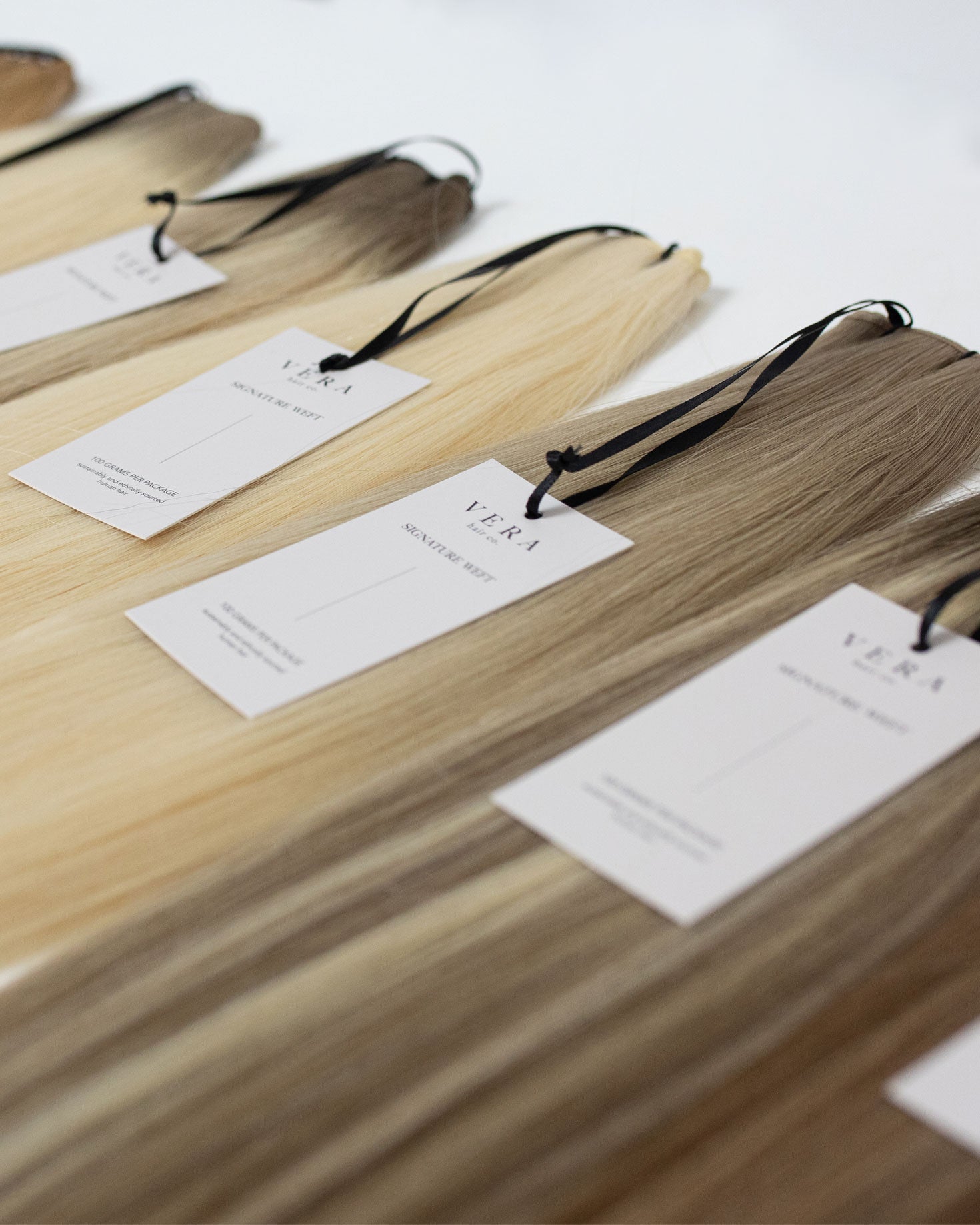
Vera Micro-Tied Wefts use ultra-thin, cut-anywhere weft construction. Vera Keratin Micro-Bonds™ use compact 0.4g pre-formed bonds designed to install directly from the pack. Both systems use Vera’s Remy hair standard, but they are not interchangeable methods.
The correct method, amount and placement still depend on the client’s natural hair, goals, lifestyle and professional assessment.
What Should Professionals Ask a Hair Extension Supplier?
Use the following questions to move beyond marketing language:
-
Is it 100% human hair, and are its cuticles intact and root-aligned?
-
Is it single-donor, multi-donor, single-drawn or double-drawn?
-
What coloring, acid processing or surface coatings are used?
-
What additional color and heat services are permitted?
-
What are the exact weight, length and attachment specifications?
-
How are shade consistency, quality control and professional support managed?
The strongest answer is not necessarily the hair with the most impressive adjectives. It is the product whose specifications are clear enough for a professional to plan responsibly and reproduce results.
Care, Coloring and Method Still Matter
Remy alignment does not make extension hair immune to tangling, dryness, heat damage or ordinary wear. Installed hair is no longer connected to a follicle, so performance depends on the finished product, attachment method, maintenance timing and home routine.
Follow the supplier’s heat and color guidance. Previously processed shades can respond differently to additional color, and every color service should begin with a strand test. There is also no universal Remy lifespan: a reinstallable weft and a keratin bond designed for one installation cycle should not carry the same reuse promise.
Our hair extension maintenance guide covers brushing, washing, drying, sleep, salon upkeep and professional removal.
Hair quality also does not decide method suitability. Compare the attachment systems in our weft hair extensions guide and K-tip hair extensions guide. Clients with lower natural-hair density should receive an individualized assessment; our guide to hair extensions for fine or thin hair explains the relevant planning factors.

Frequently Asked Questions About Remy Hair
Is Remy hair real human hair?
Yes. Remy hair is human hair collected and handled so the strands retain a consistent root-to-tip orientation. Human hair identifies the material; Remy adds information about strand direction and cuticle alignment. A synthetic product should not be represented as Remy human hair.
What is the difference between Remy and non-Remy hair?
Remy hair is kept in a consistent root-to-tip direction. Non-Remy hair may contain strands assembled in mixed directions or may have undergone processing that alters or removes the cuticle. Exact construction and processing still vary by supplier.
Is Remy hair the same as virgin hair?
No. Remy refers to alignment. Virgin commonly refers to hair that has not been chemically colored or altered before sale. The definitions address different qualities, and supplier usage of virgin can vary.
Does Remy hair tangle?
It can. Cuticle alignment can reduce friction caused by mixed strand direction, but all extension hair can tangle because of dryness, buildup, environmental exposure, friction, maintenance issues or improper care.
How long does Remy hair last?
There is no universal lifespan. The answer depends on product quality, processing, attachment type, maintenance, home care, styling and whether the product is designed for reinstallation.
How can a professional tell whether Remy hair is high quality?
Do not rely on the word Remy alone. Review cuticle condition, donor and lot standards, processing, density, shade consistency, pack transparency, attachment construction, education and quality control. Order samples or test hair when appropriate.
A Better Standard Begins With Better Questions
Remy matters because preserving root-to-tip direction maintains consistent cuticle alignment. It does not replace professional evaluation.
The better question is: “What does the supplier specify beyond Remy, and can those specifications support the planned service?”
Clients can find a Vera Artist for a professional consultation. Licensed extension professionals interested in Vera’s Remy Micro-Tied Wefts and Keratin Micro-Bonds™ can apply for professional access.